
Is That Viral Photo or Story Actually Real?
A heartbreaking photo, a “missing child” alert, a too-perfect image of a disaster or a hero. It races across your feed, and the urge to share it is instant and human. But a large share of the content that goes viral is mislabeled, out of context, AI-generated, or engineered to harvest your trust. This guide is a plain-English field manual for checking before you share: how to run a reverse image search, trace content to its earliest source, read the tells of an AI-generated image, judge whether an account is credible, and spot the fake “missing person” reposts built to farm engagement. And when a claim really matters, where lawful public-records research and skip tracing can tell you who is actually behind it.
The Short Version
Before you share anything emotionally charged, pause and run three quick checks. First, reverse image search the photo with Google Lens, Bing Visual Search, or TinEye to find where it first appeared, because the single most common trick is an old, real photo recycled to illustrate a brand-new, unrelated event. Second, trace the claim to its earliest source and look for the same story from a credible outlet; if only anonymous accounts are carrying it, treat it as unverified. Third, study the image itself for AI tells, glassy over-smooth skin, melting jewelry or eyeglasses, garbled background text, and shadows that fall in impossible directions, while remembering that no detector tool is reliable on its own. For “missing person” posts, verify through official channels like NamUs, the NCMEC, or local police before sharing, since many are reposted scams. When the question is who is really behind a viral account or whether a person is genuinely missing, that is where People Locator Skip Tracing helps: lawful public-records research and skip tracing to identify the real source. This page is general information, not legal advice.
Watch: How to Check if It’s Real
The fast checks that catch most fakes before you share.
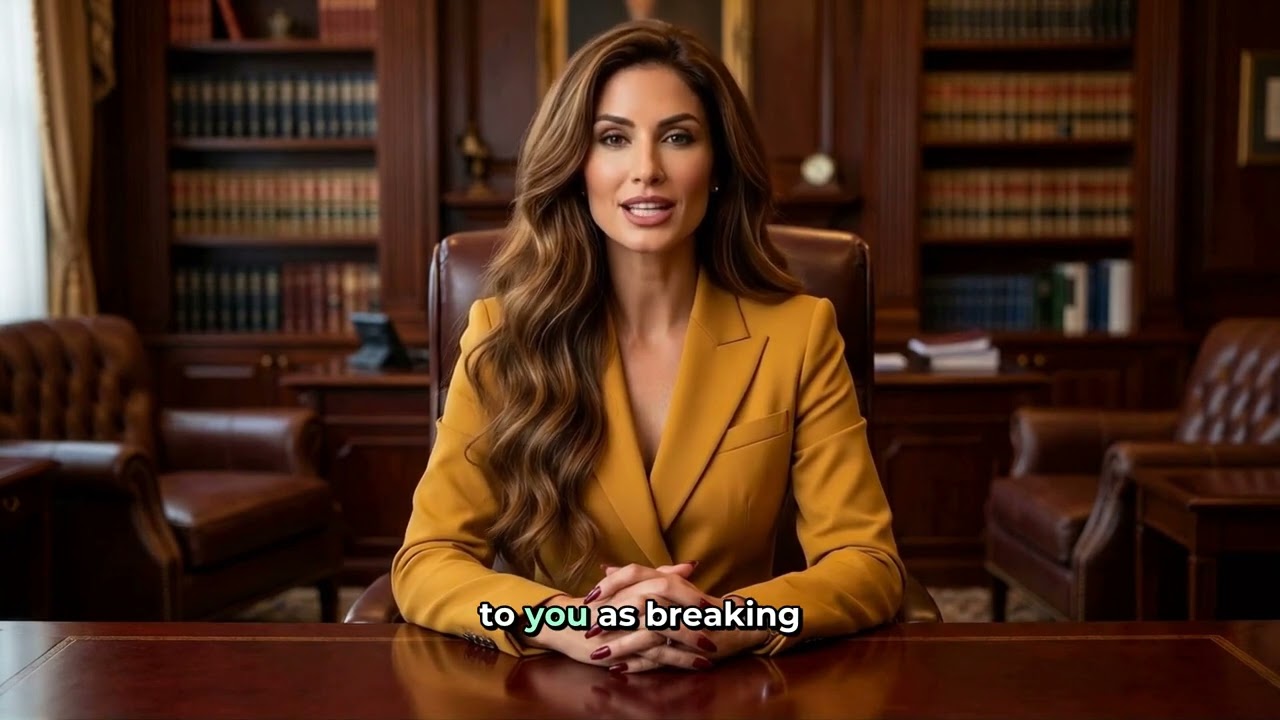 Watch Overview
Why a Fake Photo Travels Faster
The content most likely to go viral is the content least likely to be true.
Misinformation does not spread by accident. The posts that explode are the ones engineered, or simply lucky enough, to hit you in the gut: outrage, grief, awe, fear. Those same emotions are exactly what switch off the careful part of your brain that would otherwise ask, “Wait, is this even real?” A calm, accurate caption never goes viral. A shocking, false one does. That asymmetry is the whole game, and bad actors understand it far better than most of the people sharing their work.
The damage is not abstract. A recycled disaster photo redirects real donations to fake relief funds. A fabricated quote attributed to a public figure hardens into “something everyone knows.” A staged “missing child” alert exhausts the public’s attention so that the next real one gets ignored. And every time a fake clears your feed unchallenged, it trains the system that this kind of content works, which guarantees more of it. Learning to verify is not pedantry. It is the single most useful piece of digital hygiene you can practice, and it takes about ninety seconds once you know the moves.
The 90-Second Triage
Run these before you tap share. If several fire at once, do not share until you verify.
It Made You Feel a Lot, Fast
A jolt of rage, grief, or awe is the engineered payload. Strong emotion is the cue to slow down and check, not to share.
No Credible Outlet Has It
If a huge event is real, established newsrooms cover it within hours. If only anonymous accounts carry it, treat it as unconfirmed.
“Share Before They Delete It”
Urgency that pressures you to act without checking is a manipulation tactic, not a sign of a real emergency.
The Account Is New or Anonymous
A profile created last month with no history, a generic name, and a stock avatar is a weak source for an extraordinary claim.
The Image Looks Too Clean
A glossy, airbrushed, “cinematic” sheen on a supposedly candid moment is a common signature of an AI-generated image.
Comments Are Off
On a real missing-person or breaking-news post, people add details in the comments. Disabled comments are a classic repost-scam tell.
Step One: Reverse Image Search
The fastest, highest-value check you can run on any photo.
A reverse image search takes a picture instead of words and asks the search engine, “Where else does this exist?” In seconds it can surface every place the image has been posted, the date it first appeared, and the context it originally ran in. It is the single most powerful tool an ordinary person has for catching a fake, because the most common deception is not a doctored image at all. It is a genuine, untouched photo lifted from an old event and re-captioned to sell a new lie. Reverse search exposes that instantly by showing you the real first appearance.
Three engines are worth keeping in your back pocket, and you should run a stubborn image through more than one, because each indexes the web differently:
Google Lens
The broadest index and the best all-around starting point. Upload the image or paste its address, then read the matches with an eye for the oldest one and for fact-checks. Pair it with the U.S. government’s own media-literacy guidance at USA.gov, which points consumers toward verifying before they trust or share.
Bing Visual Search and TinEye
Bing often catches matches Google misses, and TinEye specializes in finding the earliest known copy and tracking how an image has been cropped or altered over time. If one engine comes up empty on an image you doubt, run it through the other two before you conclude anything.
Read the results, do not just glance
The goal is not “did it find matches” but “what is the oldest match and what did it originally show.” If your “breaking 2026 flood” photo first surfaced on a 2019 news page about a different country, you have your answer. Sort or scan for the earliest date, open the original page, and confirm the caption there describes a different event. Save the original link so that if you do correct the post, you can point to a source rather than just asserting it is fake.
Crop, then search again
A single reverse search rarely tells the whole story, because re-posters routinely crop, mirror, add a watermark, or paste a photo onto a colored banner to break the engine’s match. When a search comes up empty on an image you doubt, crop tightly to one distinctive element, a storefront sign, a building, a tattoo, a vehicle, a face, and search that fragment on its own. Engines match on the densest region of detail, so a clean crop of the most unusual object in the frame frequently surfaces the original that the full image hid. If the photo has clearly been flipped left-to-right, mirror it back before searching.
A note on EXIF and metadata
It is tempting to think the answer hides in the file’s metadata, the EXIF block that can carry the camera model, date, and even GPS coordinates. Treat it as a weak signal at best. Every major social platform strips EXIF on upload, so an image pulled from a feed almost never carries any, and its absence proves nothing. Worse, EXIF is trivially edited, so a date or location you do find can be fabricated. Use it only as a corroborating hint when you have the original file from a trusted source, never as the deciding test, and never assume a photo is genuine just because it carries a plausible-looking timestamp.
Step Two: Trace It to the Source
A picture can be real and the story around it still false. Find where it began.
Professional fact-checkers lean on a simple discipline known as SIFT: Stop, Investigate the source, Find better coverage, and Trace the claim back to its original context. You do not need a newsroom to run it. When something lands in your feed, stop before reacting. Investigate who is actually posting it, not who shared it to you, but who created it. Find better coverage by searching the core claim in your own words and seeing whether any outlet with a real masthead and a corrections policy is reporting the same thing. Then trace the item to its first appearance, which reverse image search and a plain text search usually reveal together.
Read laterally, not down
The instinct of most readers is to read down, staying on the page and judging it by how professional it looks. Fact-checkers do the opposite. They read laterally: the moment they meet an unfamiliar source, they leave the page, open new tabs, and ask the wider web what is known about that outlet, that author, that organization. A slick layout and an official-sounding name are the easiest things in the world to fake; what a fabricator cannot easily fake is a track record that other independent sources will vouch for. So before you weigh what a page claims, spend thirty seconds finding out what the rest of the internet says about who is making the claim. If the only places that vouch for a source are that source and its own network, you have learned something important.
Reverse-search the quote, not just the photo
Fabricated quotes attributed to public figures spread even faster than fake photos, because text is weightless and a convincing screenshot of a “deleted post” takes minutes to mock up. Treat any inflammatory quote as unverified until you find it at the source. Paste a distinctive phrase from the quote, in quotation marks, into a search engine, and look for the person actually saying it in a recording, a transcript, or a report from an outlet with a corrections policy. If the only hits are the same screenshot re-shared across partisan pages, with no primary recording and no mainstream coverage of something that, if true, every newsroom would cover, you are almost certainly looking at an invention. Genuine, newsworthy statements leave a primary-source trail; fabricated ones leave only echoes.
The pattern to watch for is the mismatch between a powerful image and the words wrapped around it. A real photo of a real fire, paired with a false location, a false date, or a false cause, is still misinformation, and it is the version most likely to fool a careful person, because the photo itself survives every test. That is exactly why source-tracing matters more than pixel-peeping. When a viral account or page is the original source and you genuinely need to know who runs it, the same lawful research used to trace the people behind any online footprint applies. Our walk-through of a social media investigation shows how an account, a handle, and the public records around them get connected into a real-world identity, the work most fact-check tutorials stop short of.
Step Three: Read the AI Tells
The signatures of a generated image, and an honest warning about detector tools.
Generative image tools have improved fast, and the old reliable giveaways are fading. The famous “count the fingers” trick barely works in 2026, because the leading models now render hands convincingly most of the time. So treat every single sign below as a hint, never a verdict, and stack several together before you draw a conclusion. The mistake is staring at one detail until you talk yourself into a false certainty.
The Plastic Sheen
AI images often carry an airbrushed, over-smooth, slightly glossy “cinematic” finish, even on subjects a real camera would render with grit, pores, and uneven light.
Impossible Light
Check whether every shadow falls in the same direction and whether reflections match their objects. Conflicting shadows or a reflection that does not line up is a physics violation a real scene cannot produce.
Melting Details
Look where objects meet: eyeglasses that dissolve into a cheek, a necklace chain that vanishes and reappears, fingers that do not quite close around a cup, earrings that do not match.
Garbled Lettering
Signs, labels, license plates, and background text are where models still fail. Warped, invented, or melting letters in the background are a strong generated-image signal.
The Crowd Falls Apart
Sharp subject, mushy background. Distant faces blur into smears, repeated patterns appear, and architecture bends in ways no lens produces. Zoom into the edges of the frame.
Detectors Are Not Proof
The “is this AI” checker sites are unreliable and routinely wrong in both directions. Some tools, such as Google’s, can flag images carrying an invisible SynthID watermark, but absence of a flag proves nothing.
Geolocate and chronolocate the claim
The most decisive check is often not on the pixels at all but on whether the scene matches the claimed place and time. Geolocation means confirming the where: pull out fixed landmarks, the shape of a skyline, a distinctive building, a mountain ridge, road signs and their language, license-plate formats, the side of the road traffic drives on, store names, the style of fire hydrants or power poles, and compare them against satellite imagery and street-level map views of the location the caption claims. A “wildfire in California” photo whose road signs are in another language and whose plates are the wrong shape has just failed. Chronolocation means confirming the when: the angle and length of shadows reveal the rough time of day and, combined with the season’s vegetation, can contradict a claimed date; weather records, the state of foliage, snow or its absence, even whether trees are bare can all be checked against what the caption asserts. These cross-checks are slower than a glance, but they are the closest thing to proof an ordinary person can reach, because they test the claim against the physical world rather than against a model’s habits.
Put plainly: an AI-detector score is a data point, not an answer. These detectors fail in both directions, flagging real photographs as synthetic, especially heavily edited or low-resolution ones, while passing polished fakes, and a fresh generation model often defeats a detector that worked last month. Fact-checkers do not rely on them to declare content fake, and neither should you. The durable approach is to combine signals, the visual tells above, a reverse image search, source-tracing, the geolocation and chronolocation checks, and a check against credible reporting, and weigh them together. Any one of them can mislead. Together they rarely do.
Step Four: Judge the Account
Who is posting this matters as much as what they posted.
An extraordinary claim from an account with no track record deserves no benefit of the doubt. Before you trust a source, glance at its history. When was the profile created? A page that appeared three weeks ago and instantly posts nothing but viral-bait is a flag. Does it have a consistent identity, a real posting history, and engagement that looks human, or is it a wall of recycled outrage with a generic name and a stolen avatar? Reverse image search the profile picture too; a “local mom” or “concerned neighbor” whose photo turns out to be a stock image or a stranger’s selfie is not who they claim to be.
Watch for the tells of an engagement-farming operation: a network of pages that all post the same content within minutes, profiles that pivoted from a different language or topic overnight, and comment sections stuffed with bot-like replies. These accounts are not trying to inform you. They are building reach to monetize later, whether by selling the page, redirecting it to a scam, or simply harvesting a list of people who reliably share without checking. A page that spent two years posting recipes and then abruptly became a stream of political outrage was almost certainly bought, hacked, or repurposed; its old identity tells you nothing about who runs it now. If you need to go further and establish who actually stands behind an account, that crosses from media literacy into investigation, where lawful tools like a structured people search connect online identifiers to verified public records rather than guesses.
Vet the claim, not just the messenger
A credible-looking account can still carry a false claim, and a clumsy account can stumble onto a true one, so the messenger check is only half the job. The other half is provenance: where did this specific fact come from, and can you reach the primary source it rests on? Follow the chain backward. A post cites an article; does the article exist, and does it actually say what the post claims, or does the post distort a real headline? The article cites a study or an official; does that study or statement exist, and did it find what is being asserted? Real information narrows to a checkable origin, a named agency, a court filing, a published report, an on-record official, a dataset you can open. Fabrications and distortions tend to dissolve as you trace them: the “study” has no author, the “official statement” appears nowhere on the agency’s own site, the quoted expert cannot be found. When the trail runs cold at an anonymous post that everyone is citing but no one can source, the claim is unverified no matter how widely it has spread.
The Fake “Missing Person” Repost
One of the most common and harmful viral scams, and how to catch it.
It is the post that feels impossible not to share: a missing child, a vulnerable adult, a “missing officer,” with a plea to spread it because “it takes two seconds.” Many of these are scams, and the mechanic is cynical. A scammer posts an emotional, urgent alert. Kind people share it by the thousands. Once the post has racked up reach, the scammer quietly edits the original, swapping the missing-person plea for a phishing link, a fake rental listing, or a prize contest. Because you already shared it, that scam now sits on your timeline advertising itself to everyone who trusts you. The first goal is the link. The second is a list of people who share without checking, a list that gets hit with worse scams later.
The fake-fundraiser variant runs the same engine toward a faster payout. A scammer lifts a real photo, often from genuine news coverage of an accident, an illness, a fire, or a disaster, wraps it in an urgent plea, and points it at a payment link or a hastily created fundraiser page. The image is real, the suffering it documents may be real, but the person collecting the money has no connection to either. The tells are consistent: the appeal pressures you to give immediately before the “window closes,” it routes payment to a personal cash-app handle or a brand-new fundraiser with no verified organizer, the same photo turns up under different names and different sob stories, and there is no named hospital, agency, charity, or local newsroom you can call to confirm the family is real. Before donating to any viral appeal, reverse image search the photo, confirm the campaign names a verifiable organizer with a real connection to the beneficiary, and give through the platform’s official, traceable channel, never to a stranger’s direct-payment handle. If you cannot confirm who actually receives the money, you cannot confirm it reaches anyone in need.
The good news is that these fakes are catchable, and the responsible move costs you nothing. Run this short check before sharing any missing-person post.
Comments Are Disabled
A genuine alert keeps comments open so people can add sightings and details. Turned-off comments stop anyone from flagging the post as fake.
No Official Source
Real cases trace back to NamUs, the NCMEC, a police department, or a named newsroom. A vague repost with no agency behind it is suspect.
No Location, No Date
“Please share, this is near you” with no city, no agency case number, and no date is built to feel local to everyone and verifiable by no one.
Typos and Odd Phrasing
Misspellings, broken grammar, and copy-paste phrasing suggest a mass-produced template, not a family or agency in genuine distress.
The Photo Is Recycled
Reverse image search the face. If it traces to a years-old article, a stranger’s social profile, or a different name, the alert is fabricated.
It Pivots to a Link
If the “update” suddenly asks you to click an outside link to “help,” “donate,” or “claim,” stop. That is the scam stepping out from behind the plea.
If a missing-person case is real and urgent, the right action is not a Facebook share. Call 911 or local law enforcement, and use the official systems: report and search the National Missing and Unidentified Persons System and, for children, the NCMEC. You can confirm which agency or vital-records office is the correct official channel through the federal Where to Write for Vital Records directory. Lawful records research and skip tracing exist to complement those official efforts, never to replace them, and never to interfere with an active investigation.
DIY Verification vs. a Real Investigation
Free checks catch most fakes. Some questions need lawful records research.
| The Question | What DIY Tools Do | Where Records Research Goes Further |
|---|---|---|
| Is this photo recycled? | Reverse image search surfaces the earliest appearance and original context. | Usually unnecessary, DIY answers this well on its own. |
| Is this image AI-generated? | Visual tells plus watermark checks give a confidence level, not certainty. | Confirms the underlying claim by checking the people and events for real-world records. |
| Who runs this viral account? | You can read the public profile and posting history only. | Lawful research links handles, emails, and numbers to verified public records. |
| Is this “missing person” real? | Check NamUs, NCMEC, and police; spot repost-scam tells.Verify first | Skip tracing confirms whether a named person exists and is genuinely unlocated. |
| Who is behind a fabricated story? | Source-tracing reaches the original post, then stalls at anonymity. | Public-records research can attach a real identity to the footprint, lawfully. |
| Can I act on what I found? | Enough to decide not to share and to report the post. | A documented, sourced identity supports a report, a claim, or a reunion. |
For the vast majority of viral content, the free checks on this page are all you need, and you should reach for them first. The line is crossed when the question shifts from “is this fake” to “who is really behind this” or “is this person genuinely missing.” Those answers live in records, not in pixels, and that is the work we do within lawful, permissible-purpose limits.
The Responsible-Sharing Routine
Four habits that stop you from amplifying a fake, every time.
Pause on the Feeling
If a post hits you hard and demands an instant share, that is your cue to stop. Strong emotion plus urgency is the exact recipe of engineered misinformation.
Reverse Search the Image
Run the photo through Google Lens, Bing, or TinEye. Find the oldest appearance and the original context before you accept the caption.
Find Better Coverage
Search the core claim in your own words. If no outlet with a masthead and a corrections policy is reporting it, treat it as unverified.
Correct, Don’t Just Delete
If you already shared a fake, post a brief correction with the source link. Quietly deleting leaves the false version standing in others’ feeds.
Two extra habits make the routine durable. First, never amplify a claim by quote-posting or screenshotting it to mock it; the platform’s algorithm counts the engagement either way, and a “look how fake this is” repost still puts the fake in front of thousands who will not read your caption. If you must reference it, describe it in your own words and link the debunk, not the original. Second, mind your own role in the chain: the people who follow you trust you precisely because you do not share junk, and one verified correction does more for that trust than a hundred reflexive shares. Verifying before you share is not about being right in an argument. It is about refusing to be the unpaid distribution network a bad actor was counting on. The checks on this page take about ninety seconds, and that ninety seconds is the entire cost of not becoming part of the problem.
When Verification Becomes Investigation
Where lawful public-records research is the antidote to a viral unknown.
Families
Confirm a “missing” loved one is real
Journalists
Source-check a viral account or claim
Nonprofits
Vet a viral plea before fundraising
Reunions
Trace a person an old post mentions
Scam Targets
Identify who is behind a fake page
Researchers
Add records depth to a verification
People Locator Skip Tracing positions verified public records as the antidote to viral guesswork. When the trail behind a story runs into an anonymous account, a recycled photo, or a name no one can confirm, our team researches the public record lawfully to surface who and what is actually there. That work runs through the same engine behind our help locating a genuinely missing person, reuniting a long-lost family member, and full-spectrum skip tracing. We work strictly for lawful, permissible purposes, we never interfere with an active law-enforcement case, and we tell you honestly what the records can and cannot show. For a legitimate matter, an initial locate typically comes back within 24 hours.
Our Commitment
We do not traffic in rumor or guesswork. We do the lawful research most of the internet skips: connecting an anonymous account, a recycled photo, or an unverified name to what the public record actually shows, so you can act on fact instead of a feed. Honest, permissible-purpose skip tracing since 2004. We hold one line without exception: if the person has a protective or no-contact order, or has gone quiet to stay safe from abuse or stalking, we do not help locate them.
Frequently Asked Questions
What is the single fastest way to check if a viral photo is real?
Run a reverse image search with Google Lens, Bing Visual Search, or TinEye. In seconds it shows where the photo first appeared and in what context. The most common deception is a genuine old photo recycled to illustrate a new, unrelated event, and reverse search exposes that immediately by surfacing the original.
How can I tell if an image was generated by AI?
Look for several tells together: an over-smooth, glossy “cinematic” sheen, melting details where objects meet (eyeglasses, jewelry, fingers), garbled background text on signs or labels, and shadows that fall in impossible directions. No single sign is proof, and counting fingers no longer works reliably in 2026, so stack multiple signals and combine them with a reverse image search.
Are AI-detector tools accurate?
No, not reliably. The “is this AI” checker sites are routinely wrong in both directions, and professional fact-checkers do not depend on them. Some tools can flag images that carry an invisible watermark such as Google’s SynthID, but a clean result proves nothing. Treat any detector score as one data point among several, never as a final answer.
Why are so many “missing person” posts on Facebook fake?
Many are engagement-farming scams. The scammer posts an emotional alert, lets thousands of people share it, then edits the original into a phishing link, fake rental, or contest that now rides on everyone’s timelines. The goal is the link plus a list of people who share without checking. Verify any missing-person post through NamUs, the NCMEC, or local police before sharing.
What should I do if a missing-person alert seems real and urgent?
Do not rely on a social-media share. Call 911 or local law enforcement, and use the official systems: the National Missing and Unidentified Persons System for adults and the NCMEC for children. Lawful records research and skip tracing complement those official efforts; they never replace them and never interfere with an active investigation.
How do I check whether the account posting something is credible?
Look at the profile’s age, posting history, and consistency. A brand-new page that posts nothing but viral bait, uses a generic name, or has a profile photo that reverse-searches to a stranger or a stock image is a weak source. Networks of pages posting identical content within minutes are usually engagement-farming operations building reach to monetize later.
A photo is real but the story around it is false. How is that possible?
That is the most common form of misinformation. A real, untouched image survives every reverse-search and AI check, yet the caption attaches a false date, location, or cause. This is why source-tracing matters more than pixel-peeping: use the SIFT method to find better coverage and trace the claim back to its original context, not just the image.
How can People Locator Skip Tracing help me verify viral content?
When verification runs into an anonymous account, a recycled photo, or a name no one can confirm, we research the public record lawfully to surface who and what is actually behind it, and to confirm whether a named person genuinely exists or is unlocated. We work strictly for lawful, permissible purposes, never interfere with an active case, and report only what the records support. This is general information, not legal advice.
Related Guides
More ways we can help.
- How to Trace the Source of a Viral Video
- How to Find a Witness Seen in a Viral Video
- How to Find Someone by Their Gamertag
- How to Spot Stolen Valor
- How to Find a Godparent or Godchild
- How to Find a Subcontractor Who Abandoned a Job
- Find a Client Who Disappeared Owing You
- What Can Someone Do With Your Name and Birthday?
Need to Know Who’s Really Behind It?
When a viral photo, account, or “missing person” claim needs more than a reverse image search, our team researches the public record lawfully to find the real source, typically with an initial locate within 24 hours. Contact us to get started.
Start Your Request →

